

Struggling with St Augustine grass problems? Learn how to spot hidden causes like thatch, poor drainage, and winter dormancy. Get expert tips to treat and prevent damage before it spreads. St Augustine grass is a warm-season favorite for good reason. It forms a thick carpet, thrives in heat, and handles salt and humidity well. But that doesn’t mean it’s immune to issues. From yellowing blades to aggressive fungal attacks, even healthy-looking lawns can start to decline quickly if warning signs are ignored. If you’re facing these challenges in hotter, drier regions, see our guide on St Augustine Grass in Texas for tailored solutions.
In This Article
Over the years managing lawns in humid Southern climates, I’ve seen firsthand how quickly a thriving St. Augustine lawn can turn patchy and stressed. The good news? Most problems have simple solutions if you catch them early. This guide walks through the most common St. Augustine grass problems I encounter, how to identify them, and most importantly how to fix them fast.
St Augustine Grass Problems: Turning Yellow?

Yellowing grass is one of the earliest red flags homeowners notice. If your St Augustine grass is turning yellow, the cause could be as simple as overwatering or as serious as a nutrient imbalance.
Start by checking your irrigation schedule. Too much water, especially during cloudy weeks, can reduce oxygen in the root zone. Second, examine the thatch layer. Excessive buildup suffocates the roots and turns the lawn a pale yellow.
In my experience with St Augustine grass problems, one of the most overlooked causes is iron deficiency. A quick soil test can reveal pH levels that lock out iron and other nutrients. I once helped a client with a perfectly fertilized lawn that still yellowed and turned out the soil was too alkaline. Applying a chelated iron product solved the problem in under a week.
Solutions:
- Adjust watering to 1 inch per week, split over 2 sessions
- Apply iron sulfate or chelated iron if soil test shows deficiency
- Dethatch in spring or early summer if thatch exceeds 0.5 inches
Yellowing doesn’t mean your lawn is dying, it’s your grass asking for help.
St Augustine Grass Problems: Brown Spots?
When brown spots show up, many homeowners assume it’s a fungus. But from what I’ve observed, St Augustine grass problems like heat stress are just as likely especially after a spike in summer temps.
First, walk your lawn in the early morning. If the brown patches feel dry and crunch underfoot, it could be underwatering. If the surrounding blades are wilted or curled, suspect heat damage. This often happens in compacted soil or slopes where water drains too quickly.
One time, a homeowner reached out, frustrated by brown patches that just wouldn’t go away. They’d already treated their lawn with fungicide twice but the spots kept spreading. When I stopped by to take a look, it didn’t take long to spot the problem: several sprinkler zones weren’t working at all. Some areas were bone dry. After replacing a few faulty rotor heads and updating the watering schedule, the lawn started showing signs of recovery in less than two weeks. Sometimes, the issue isn’t what you treat, it’s what you overlook.
Checklist:
- Rule out irrigation gaps by testing all sprinkler zones
- Deep water 2–3 times per week during drought periods
- Mow at 3.5–4 inches to protect the crown from sunscald
Brown spots are usually fixable, but misdiagnosing the cause wastes time—and money.
Fungus in St Augustine grass
Fungus in St Augustine grass is a silent killer. Early diagnosis is crucial, especially during high humidity or after heavy rain.
Watch for circular patches with a smoky or greasy look. If you’re seeing gray or purple lesions on the blades, you might be dealing with gray leaf spots. Brown patch, another common issue, forms circular dead zones that expand quickly.
Last summer, I helped a homeowner recover from a severe fungal outbreak by simply adjusting their mowing routine. They were mowing too low and bagging clippings. Switching to a higher cut and mulching allowed the lawn to heal naturally. From lawn stress to pest invasions, St Augustine grass problems are more manageable when addressed with local experience and seasonal awareness.
Diagnosis Tips:
- Check leaf blades for spots or water-soaked lesions
- Avoid mowing when grass is wet to prevent disease spread
- Improve air circulation by trimming surrounding hedges or trees
Remember, fungal diseases thrive in shade, moisture, and stress alter just one of these conditions, and you disrupt the cycle.
Brown Patches In St Augustine Grass

Brown patch is one of the most aggressive fungal diseases affecting St Augustine lawns. It usually strikes in late summer or fall when warm days and cool nights create ideal conditions.
You’ll notice patches of brown or tan grass that form perfect circles, sometimes with a darker ring on the outer edge. It often starts in shaded or overwatered areas.
I always tell my clients: the key to beating St Augustine grass problems like brown patches is to act fast. Reduce nighttime watering, raise mowing height, and apply a targeted fungicide.
Treatment Plan:
- Water early in the morning only
- Apply a fungicide with azoxystrobin or propiconazole
- Maintain mowing height at 3.5–4 inches
Brown patch spreads quickly but responds well to early intervention. One season, a homeowner I worked with applied a granular fungicide right before a fall cold snap stopped the spread cold, and the lawn bounced back stronger in spring.
Fungicide for St Augustine grass
Selecting the correct fungicide can make or break your treatment plan. St Augustine grass problems respond best to systemic fungicides that penetrate the blade and root system.
For brown patches and large patches, look for products with azoxystrobin or flutolanil. For gray leaf spot, propiconazole and thiophanate-methyl are your best bet.
Make sure to rotate fungicides every season to avoid resistance. One mistake I often see is homeowners applying the same active ingredient multiple times fungus adapts quickly, and your lawn pays the price.
Application Tips:
- Follow label directions strictly for dosage and watering-in
- Avoid treating in midday sun; early morning or late afternoon is best
- Reapply in 14–21 days if conditions persist
The right fungicide, used the right way, can restore even heavily damaged lawns.
St Augustine Grass Disease Identification

If your lawn has spots, patches, or discoloration, the real challenge is figuring out what is causing it. Disease identification saves time and prevents unnecessary treatments. Many St. Augustine grass problems begin with misdiagnosed symptoms that look like fungus might be poor irrigation or a nutrient issue. Being able to recognize signs early can save your lawn from damage and reduce the need for chemicals or expensive recovery steps.
Use this simplified chart I share with clients:
| Symptom | Likely Cause |
| Circular brown patches | Brown Patch |
| Gray or purple leaf lesions | Gray Leaf Spot |
| Yellowing near soil surface | Take-All Root Rot |
| Blackened roots, stunted growth | Root Rot |
| Rapid decline after fertilizing | Overfertilization Burn |
Walk the lawn and document changes over 3–5 days. Fungus tends to spread; stress patches stay stable.
If unsure, take a sample to your local extension office or consult a turf professional. Correct diagnosis is half the cure.
St. Augustine Grass Problems: Dethatching St Augustine grass
Thatch is the dense layer of dead stems, roots, and organic debris that settles between the green blades and the soil. While a thin layer (less than half an inch) can insulate roots and preserve moisture, too much of it acts like a sponge, holding on to moisture, harboring pests, and blocking nutrients.
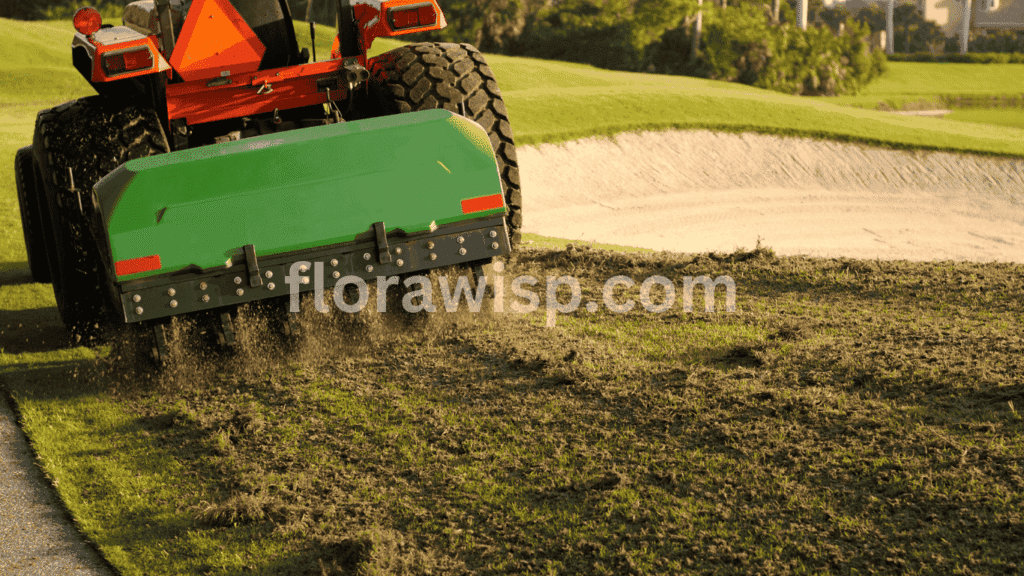
Here’s what I’ve learned from years of helping clients rescue their lawns from thatch overload, one of the most overlooked St Augustine grass problems:
1. Know Your Threshold
If thatch exceeds 0.5 inches, water and fertilizer struggle to reach the roots. You’ll notice weak spots even after feeding or watering. One client couldn’t figure out why her lawn stayed dull until we sliced into the turf and saw over an inch of tightly packed thatch.
2. Don’t Just Rake Use the Right Tools
St. Augustine grass is sensitive, so I recommend using a vertical mower or a dethatching rake made for soft, warm-season grasses. I’ve seen lawns bounce back beautifully within 2–3 weeks when dethatched in late spring.
3. Prep and Recover Properly
- Mow to 2 inches before dethatching.
- Dethatch only when the grass is actively growing, never during drought or disease.
- Follow up with a light watering and a thin compost top-dress to nourish exposed roots.
4. Keep an Eye Out for Pests
Thatch invites chinch bugs and sod webworms. If your lawn feels bouncy or spongy underfoot, it’s time to investigate.
5. Annual Check-Up
Once a year, take a pocket knife and slice into a small section of your lawn to measure thatch depth. A 60-second check can prevent months of poor performance.
Maintaining proper thatch levels has become one of my non-negotiables. It’s often the hidden culprit behind lawn stress, and fixing it leads to greener, thicker growth almost overnight.
Winter Dormancy vs. St. Augustine Grass Problems
St. Augustine grass in winter often goes dormant when temperatures drop below 50°F. But dormancy and disease can look nearly identical, something I learned the hard way in my first Florida winter.
Here’s how I learned to tell the difference and protect my lawn through cold months:
1. Check the Color Pattern
Dormant grass fades to a uniform tan or straw-like hue across the lawn. Disease, like brown patch fungus, shows up in scattered circles or patches with inconsistent coloring. Once, I mistook a brown patch outbreak for dormancy and lost weeks of growth in spring recovery.
2. Do the Tug Test
Grab a few blades and pull gently. Dormant grass holds firm because the roots are still strong. If they come out easily, the roots may be rotting. I use this quick check every January and it’s helped me catch early-stage fungal issues.
3. Feel the Blades and Roots
Healthy dormant grass feels dry and crisp, but not mushy. Diseased blades turn slimy, and roots blacken. If the area is soft or smells sour, there’s more going on than winter rest.
4. Smart Winter Care Tips
- Avoid fertilizing during dormancy. It encourages fungus instead of growth.
- Water only if there’s been no rain for over two weeks.
- Keep traffic lights frozen or wet grass compacts easily and damages the root zone.
Understanding these differences helps you avoid unnecessary treatments and gives your lawn a stronger, healthier return come spring.
Lawn Habits That Prevent St. Augustine Grass Problems
The best defense against St. Augustine grass problems is a solid maintenance routine. In my years of working with homeowners across Florida and Texas, I’ve seen how a few simple habits can prevent most lawn issues before they start.
1. Mow High and Steady: Keep your St. Augustine grass mowed at 3.5 to 4 inches. This height shades the soil, reduces water loss, and protects the growing crown. Scalping the grass opens the door to stress and weed invasion.
2. Water Deep, Not Often: Instead of frequent shallow watering, aim for one deep soak per week about 1 inch of water, including rainfall. This trains roots to grow deeper, making your lawn more drought-tolerant. Early morning is ideal to minimize evaporation and fungal risk.
3. Fertilize on a Set Schedule: Stick to slow-release nitrogen formulas in spring and early summer. Overfeeding leads to excess growth, which can attract chinch bugs and increase disease risk. A balanced, controlled approach supports steady, healthy growth.
4. Dethatch Every Year: Even healthy lawns can build up thatch. A half-inch or more prevents water and nutrients from reaching the roots. Use a dethatching rake in early spring or fall to keep the layer in check.
5. Walk Your Lawn Weekly: Regular observation helps catch brown spots, weeds, or pests early. A 10-minute walk once a week can prevent small issues from turning into costly problems.
These habits are simple but powerful. They create a strong foundation that helps your lawn resist disease, drought, and wear throughout the year.
Final Thoughts
No lawn is perfect year-round, especially in warm, humid climates where St. Augustine thrives. But most St. Augustine grass problems aren’t about luck; they come down to timing, awareness, and consistency.
From my own experience, early detection makes all the difference. If you catch issues before they spread, you’ll save time, money, and effort. And when in doubt, take a sample, run a soil test, and consult someone who’s worked hands-on with this grass.
If you’re dealing with shade, heat, or humidity challenges in the Southeast, see our guide to St Augustine grass Florida. For dry spells, alkaline soil, or unpredictable seasons, check out tips tailored for St Augustine grass in Texas.
Your lawn will always give you signs it’s just a matter of learning how to read them and respond with the right care at the right time. If you’re just getting started or want a full breakdown, check out our complete guide to St Augustine Grass to understand how to grow, maintain, and troubleshoot it year-round.
FAQs
Q. What causes yellowing in St. Augustine grass besides fungus?
Yellowing may be due to iron deficiency, compacted soil, or waterlogged roots issues I’ve often seen in poorly drained yards. Adjusting soil pH with sulfur or iron supplements and aerating the compacted areas typically revives the color within a week or two. Testing your soil before treatment is essential to avoid misdiagnosis.
Q. Can I dethatch St. Augustine grass by hand, or do I need equipment?
For small patches, a manual thatch rake works well. I’ve used it on narrow side yards and high-traffic corners. For larger spaces, a vertical mower is more efficient. Always dethatch when the grass is actively growing, preferably late spring. Avoid drought or recovery periods.
Q. Is St. Augustine grass more prone to fungus than other turfgrasses?
Yes. Its dense canopy and preference for humid, warm climates make it vulnerable to fungal outbreaks. In my experience, most fungal problems start with overwatering or mowing too low. Keeping blades sharp and mowing at 3.5–4 inches has drastically cut down on issues in my clients’ lawns.
Q. How do I know if my St. Augustine grass is dead or just dormant in winter?
Dormant grass is evenly tan and resists pulling, while dead grass appears patchy and pulls up easily due to decayed roots. A tug test combined with inspecting the root zone helps confirm the condition. I always check this after the first frost to avoid unnecessary reseeding or fertilizing.
Sources
University of Florida IFAS Extension – St. Augustine Grass for Florida Lawns
The Lawn Institute – Thatch, Lawn Stress, and Grass Disease Basics

Gardener, M.Sc. Horticulture
Elara Bennet is a gardening writer from Austin, TX, passionate about sustainable lawns and blooms. Read full bio →


